

When Art Becomes Infrastructure
What a street intersection in Santa Barbara reveals about the future of public art.

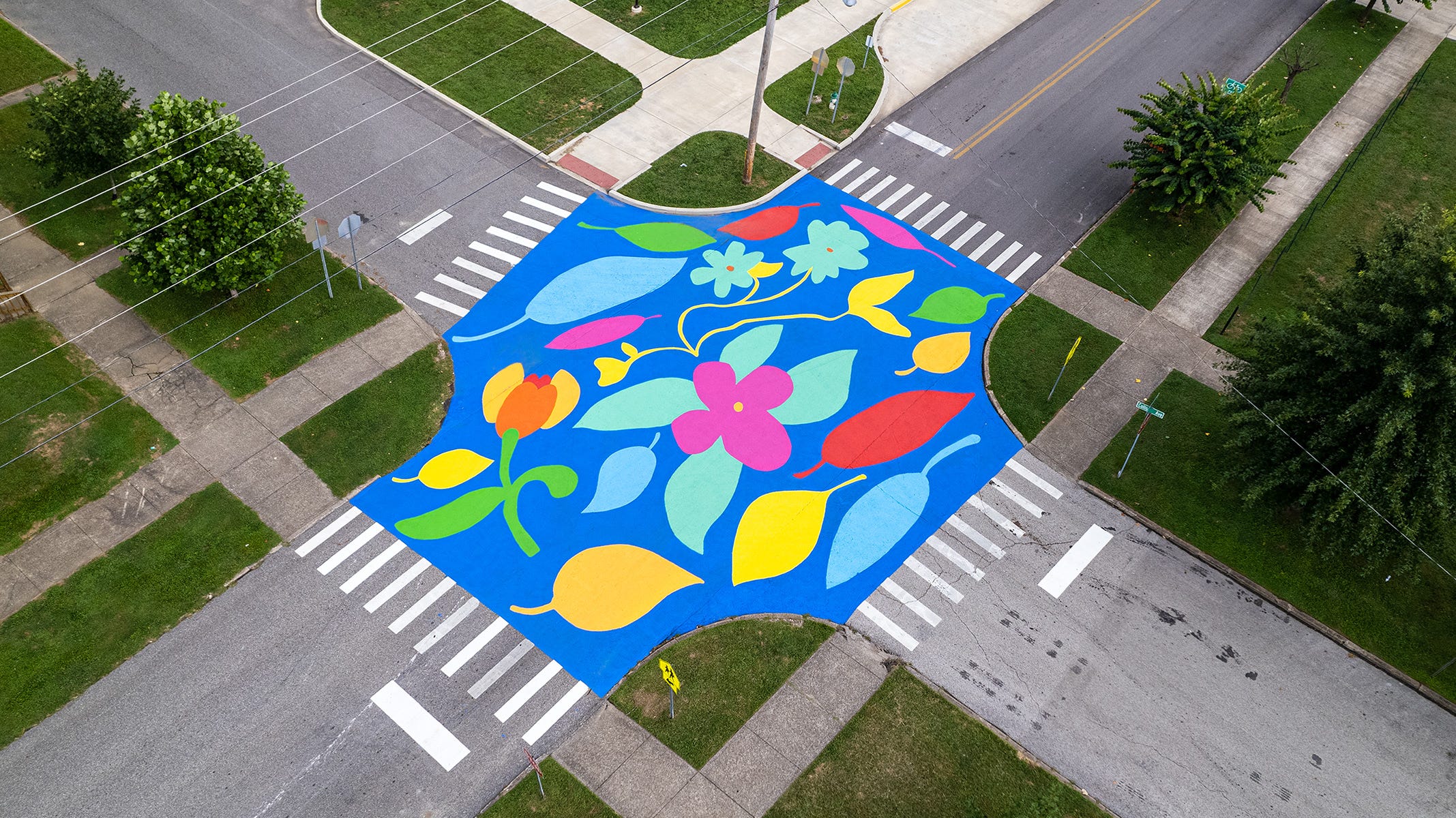
Art and community are tightly linked, yet the conversation around art is often framed in terms of absence: lack of funding, lack of institutional support, lack of access. These deficits are real and measurable, and they shape who gets to make art and who gets to experience it.
But focusing exclusively on scarcity obscures a more structurally interesting question: under what conditions does art stop being a discrete object and start becoming part of a system?
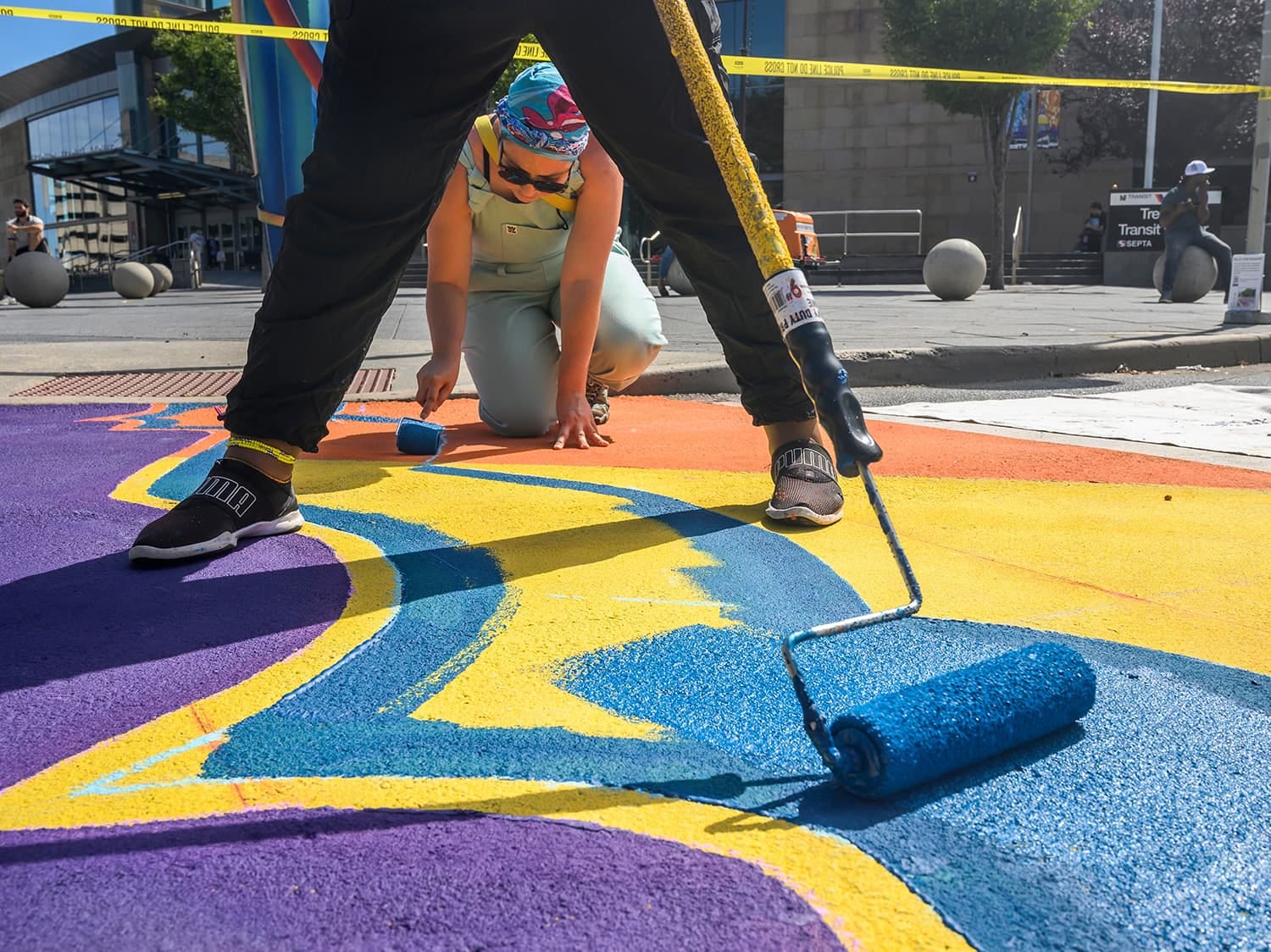
In Santa Barbara, where Birth of Reason is filmed, a new public art installation offers a concrete example. Funded through a Bloomberg Philanthropies grant and approved by the city, the project is being built directly into the Carrillo and State Street intersection (2). It’s something you move through. Walk across. Bike over. Drive through. That means more on a daily basis to the community than any masterpiece hanging on a wall.
The project, led by Zapotec weaver Eduardo Jimenez and graphic artist Irene Ramirez in collaboration with local community members, draws on a visual language rooted in Zapotec textile traditions—highly structured, geometrically complex patterns that have long carried cultural information: identity, lineage, cosmology (4,5).
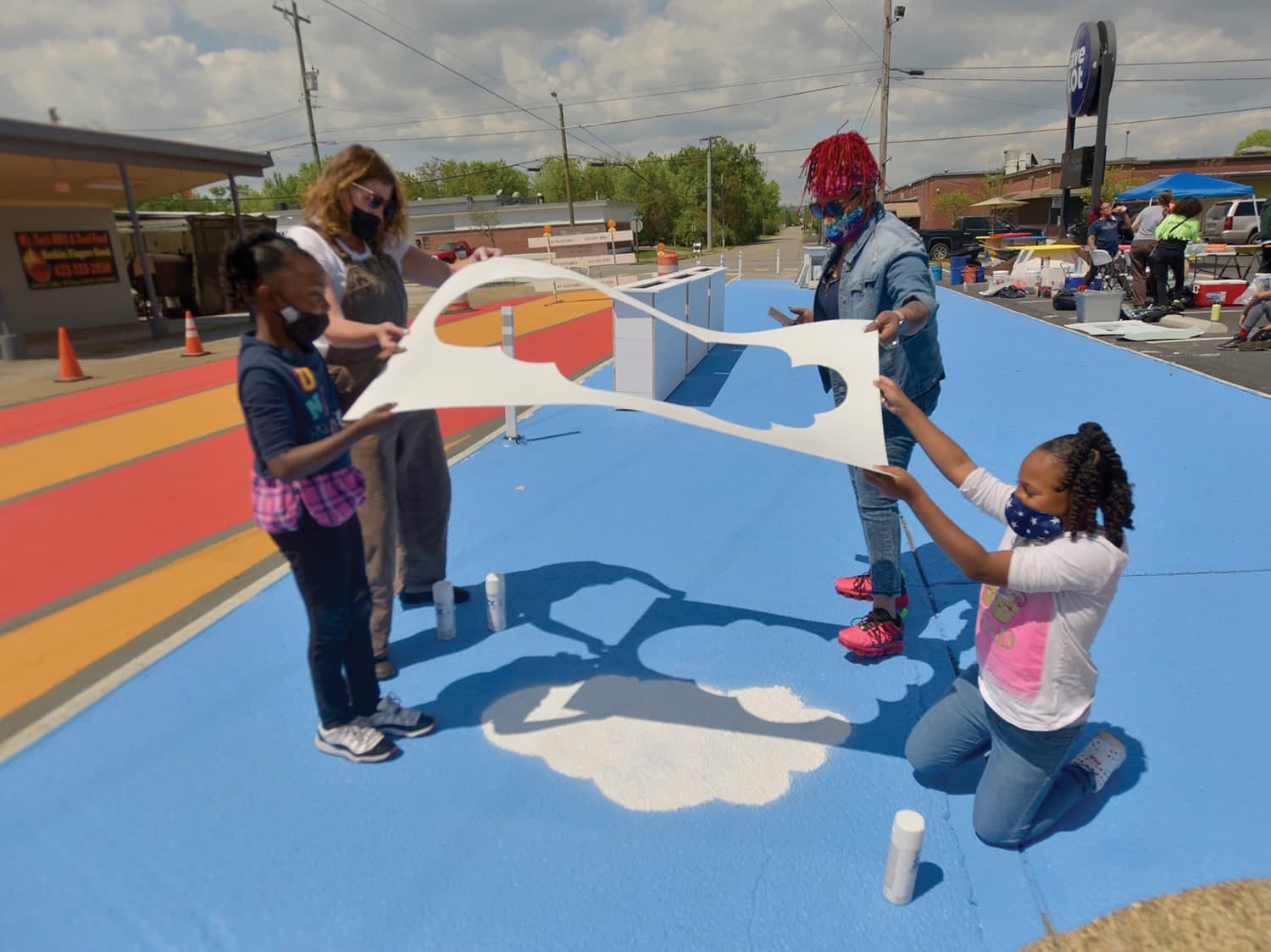
That context matters. In many Zapotec communities, weaving is not separate from life but rather embedded within it. These textiles were not made for display behind glass, but for use, circulation, and continuity. There is a conceptual throughline here, even as the medium shifts from fabric to asphalt. The question becomes what happens when a tradition rooted in cultural continuity is translated into the infrastructure of an American city (3).
This is what it looks like when art is not treated as an addition, but as part of how a place functions.
Projects like this are often described as “asphalt art,” but the term understates what’s happening. There is growing empirical evidence that these interventions can slow traffic and improve pedestrian safety, suggesting that aesthetic design can produce behavioral change at scale (2). At that point, the idea of “art as infrastructure” stops being metaphorical and becomes at least partially literal.
As Michael Bloomberg put it, “Public art has the power to reshape the way we experience our cities… inspire people, draw in visitors, and enhance residents’ quality of life” (1). Cities are increasingly acting on that premise.
Santa Barbara is one of only ten cities in North America selected for this $100,000 grant. And it is not happening in isolation. Across the country, municipalities are investing in artists and cultural work at scale. San Francisco alone recently awarded over $10 million to artists and cultural organizations in a single cycle, framing it as a commitment to the groups that “represent the soul of the city” (6).
Taken together, these shifts suggest a reframing. Art is no longer only something you go out of your way to see. In some cases, it is becoming part of the systems you move through every day.
And that raises a more subtle question: when art is fully embedded in a place, does it change how people experience it, or does it simply change what they no longer notice?
I’m curious what it will feel like once it’s there.
Works Cited
Cruz, Ryan P. “Santa Barbara Selected for Bloomberg Philanthropies $100k Asphalt Art Grant.” The Santa Barbara Independent, 17 June 2025, www.independent.com/2025/06/17/santa-barbara-selected-for-bloomberg-philanthropies-100k-asphalt-art-grant/. Accessed 19 Apr. 2026.
“Edhat.” Edhat, 20 June 2025, www.edhat.com/news/city-of-santa-barbara-selected-for-asphalt-art-initiative-grant/. Accessed 19 Apr. 2026.
Editor. “Zapotec Culture.” Our History - Our History Archive, Where History Comes to Life, 25 June 2025, www.ourhistory.org.uk/the-enduring-legacy-of-zapotec-culture-in-oaxaca/?utm. Accessed 19 Apr. 2026.
Gonzalez, Ana. “Mexican Woven Textiles from Oaxaca: Living Craft beyond Decoration.” Manos Libres, 7 May 2023, www.lasmanoslibres.com/blogs/journal/mexican-woven-textiles-oaxaca-zapotec?utm_source=chatgpt.com. Accessed 19 Apr. 2026.
Initiative, Art. “Santa Barbara County Office of Arts & Culture.” Santa Barbara County Office of Arts & Culture, 2019, www.sbac.ca.gov/bloomberg-asphalt-art-initiative. Accessed 19 Apr. 2026.
“Mayor Lurie, San Francisco Arts Commission Award More than $10 Million to Support 151 Local Artists, Nonprofits, Cultural Organizations | SF.gov.” Sf.gov, July 2025, www.sf.gov/news-mayor-lurie-san-francisco-arts-commission-award-more-than-10-million-to-support-151-local-artists-nonprofits-cultural-organizations?utm_. Accessed 19 Apr. 2026.
“The History of Oaxaca’s Traditional Zapotec Weaving.” Mexicohistorico.com, 2026, www.mexicohistorico.com/paginas/The-History-of-Oaxaca---s-Traditional-Zapotec-Weaving.html?utm. Accessed 19 Apr. 2026.
 | A guest post by
|